Class marshals have been leading Commencement since the 1800s
Over the decades, these special Tar Heels kept the event on schedule with “savoir faire,” sometimes sporting gold-headed canes.
From Carolina’s earliest days, senior class marshals have performed critical roles during Commencement and other campus events while working to give their class a fantastic last year.
The earliest Commencement program in Wilson Library’s holdings showing a processional order is from 1844. It lists a marshal named Virginius H. Ivy and four assistants as leading faculty, students and even “strangers and visitors” from South Building past the original Caldwell Monument just west of Old West building, to “the Chapel,” as Person Hall was called.
An 1893 North Carolina University Magazine describing campus in the mid-1800s states that all students elected the chief marshal from the junior class and that the “marshal was conspicuous for good manners . . . and savoir faire.” The marshal’s duties included selecting six assistants called “subs,” riding to Raleigh Road to “escort the band into the village” and sporting a gold-headed cane while leading the processional. One duty, discontinued by the 1870s, was to stand on South Building’s steps to announce the titles of the processional sections as they passed by.
Early one-page programs warned that marshals were to be “prompt and vigilant in pointing all persons to their appropriate places” while “authorities” will “expect and require obedience to their commands.”
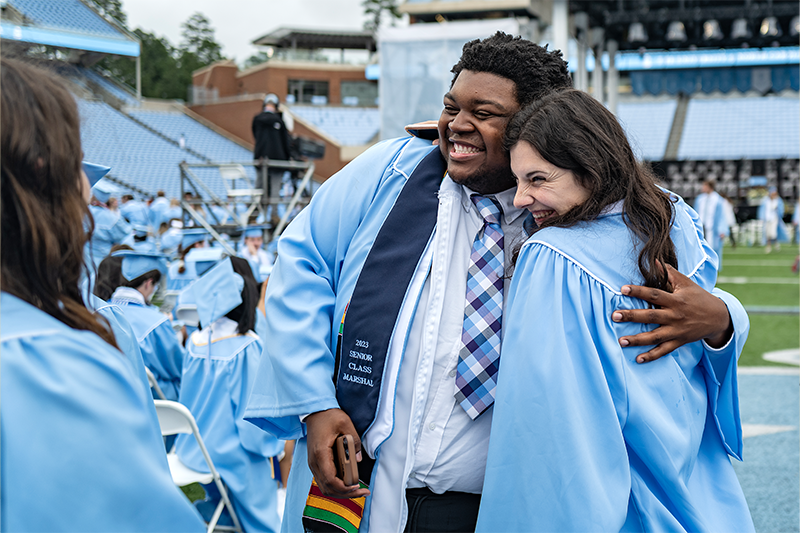
(Johnny Andrews/UNC-Chapel Hill)
Modern times
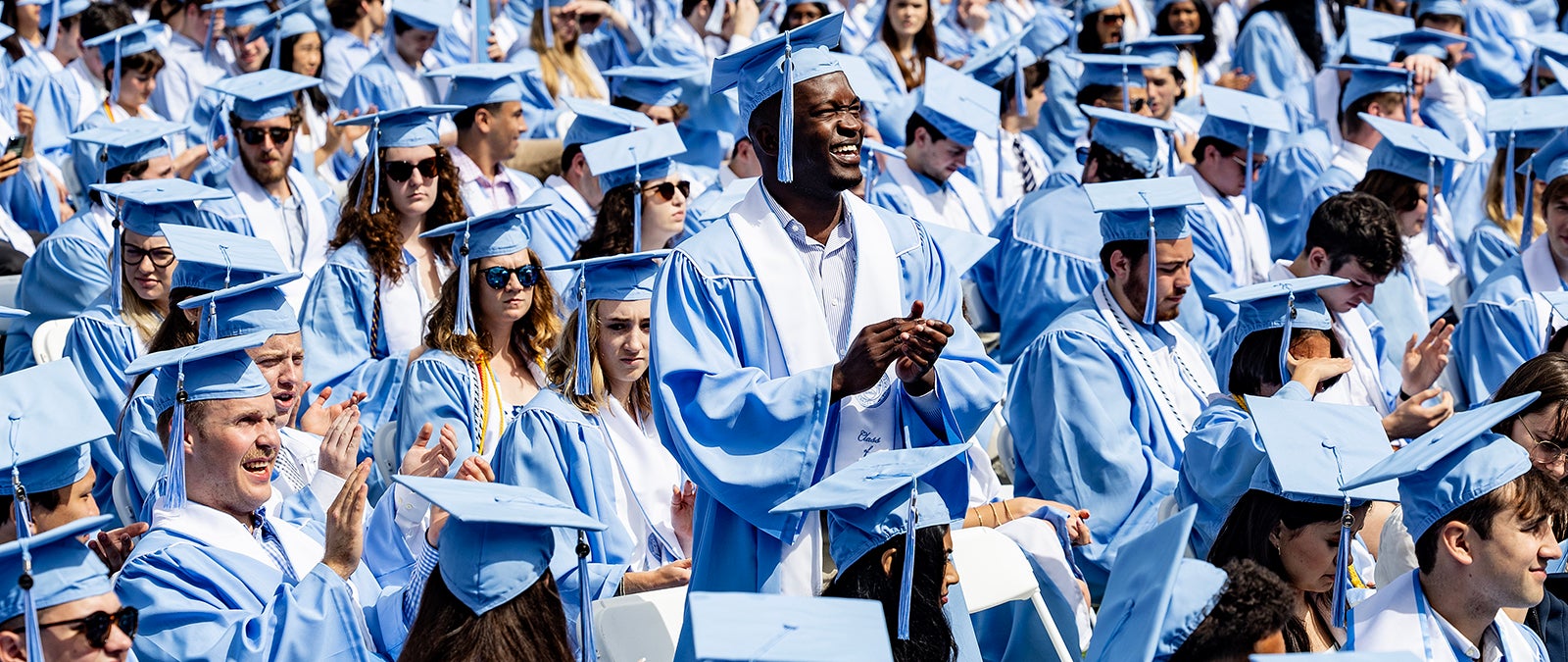
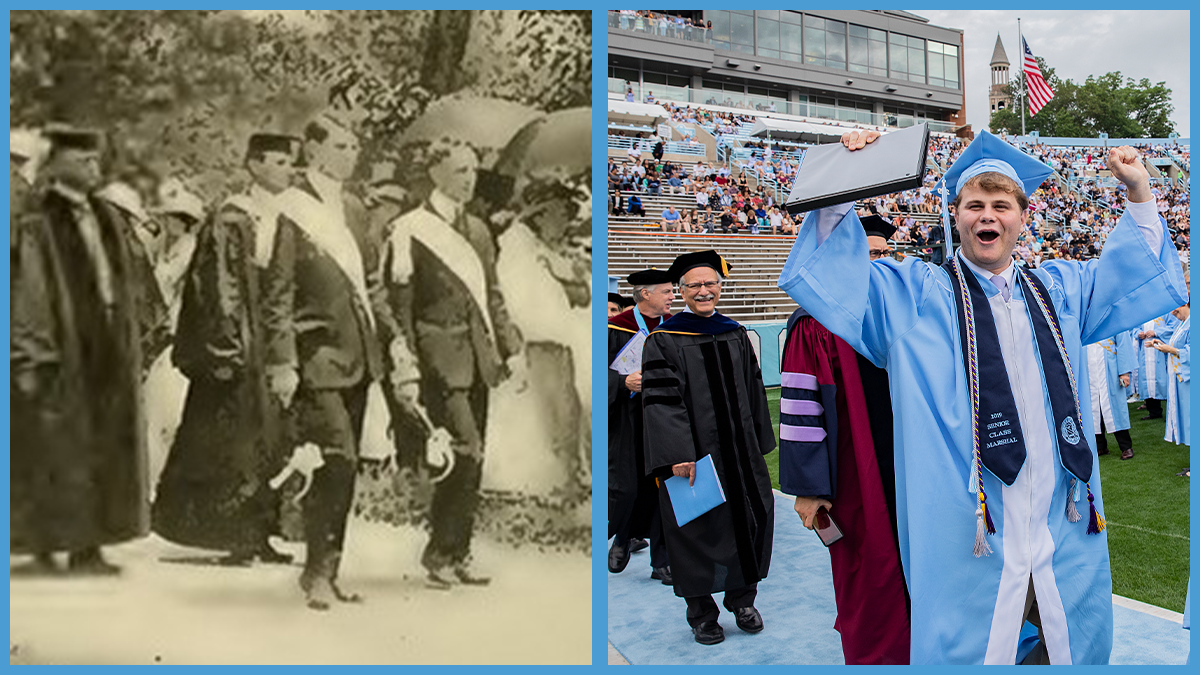
During the past four decades, marshals have usually numbered 30 to 40. Carolina Alumni staff began advising the group in the late 1990s. Today, they help organize the graduate processional and hand out programs and water bottles. You can identify marshals by the dark blue stoles they wear.
Marshals consist of elected class officers and a diverse group of juniors who apply for marshal positions in April. Then, officers select marshals in time for them to volunteer for Spring Commencement. They work at University Day and Winter Commencement. They also plan and hold events such as benefit nights, a class ring ceremony, the Bell Tower Climb and Last Lecture.
Marshals help officers build and promote a fundraising campaign, soliciting donations from classmates for a class gift to the University.
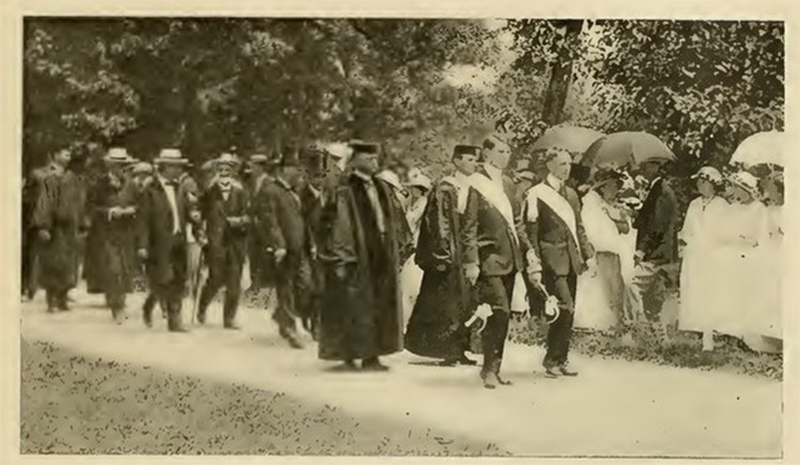
Photo from The Alumni Review of the 1914 Commencement processional, showing class marshals wearing sashes and leading the processional to the original Memorial Hall. (Archival photo 1914)
Changes through the years
Commencements once were smaller, yet still important, affairs than they are today. As the celebration grew in scope, Student Affairs personnel on the Commencement committee worked closely with incoming senior class officers and marshals, who led sections of the processional to their seats, which kept the event on schedule. They carried banners with the names of schools and degrees.
Fred Schroeder, former dean of students, organized the marshals from 1964 to 1997, assisted by staff members Jim Kessler and Laura Thomas. Schroeder, who retired in 1998, had marshals rehearse the day before Commencement. He and his wife, Sue, hosted a cookout at their house that night.
Kessler, former director of accessibility resources, coordinated marshals for Commencement from 1998 until 2012. After a dry run the day before Commencement, Kessler organized a cookout on South Building’s landing overlooking Polk Place.
During the 1940s and 1950s, seven or eight marshals served. The number increased gradually in ensuing decades, topping out at 43 in 1994.
Marshal milestones
In 1936, the first female marshal, Nannie Louise Davis ’37, was elected. She graduated with a bachelor’s degree in commerce and lettered in basketball.
The University’s Centennial in 1895 kept marshals busy. They worked at Commencement on June 3, a ceremony celebrating George Washington’s birthday on Feb. 2 and the Di-Phi Inter-Society Debate.
Sources include 1893 University Magazine and UNC Libraries sources.