The University’s new mark is anything but
The iconic interlocking NC logo, dating back to the 1800s, represents Carolina’s connection to the Tar Heel State.
Press the play button above to watch the video
When Carolina began calling itself the Tar Heels, the idea was that the nickname would not only represent the students from UNC-Chapel Hill competing in athletics but evoke pride among people across North Carolina, the Tar Heel State.
A similar connection exists with Carolina’s famous interlocking NC logo, long associated with Tar Heel sports but in fact one of the University’s earliest marks. It dates to at least the 1870s when used in Commencement invitations and was later adopted by athletics teams in the 1890s, first by the baseball team.
“When UNC teams started competing in intercollegiate sports, they were looking for something to wear to say where they came from,” said University Archivist Nicholas Graham. “They adopted the symbol, that may have been in use by the state of North Carolina, because they would have seen themselves as representing all of North Carolina.”
More than a century later, the interlocking NC logo remains largely unchanged and is instantly recognizable by millions across the globe.
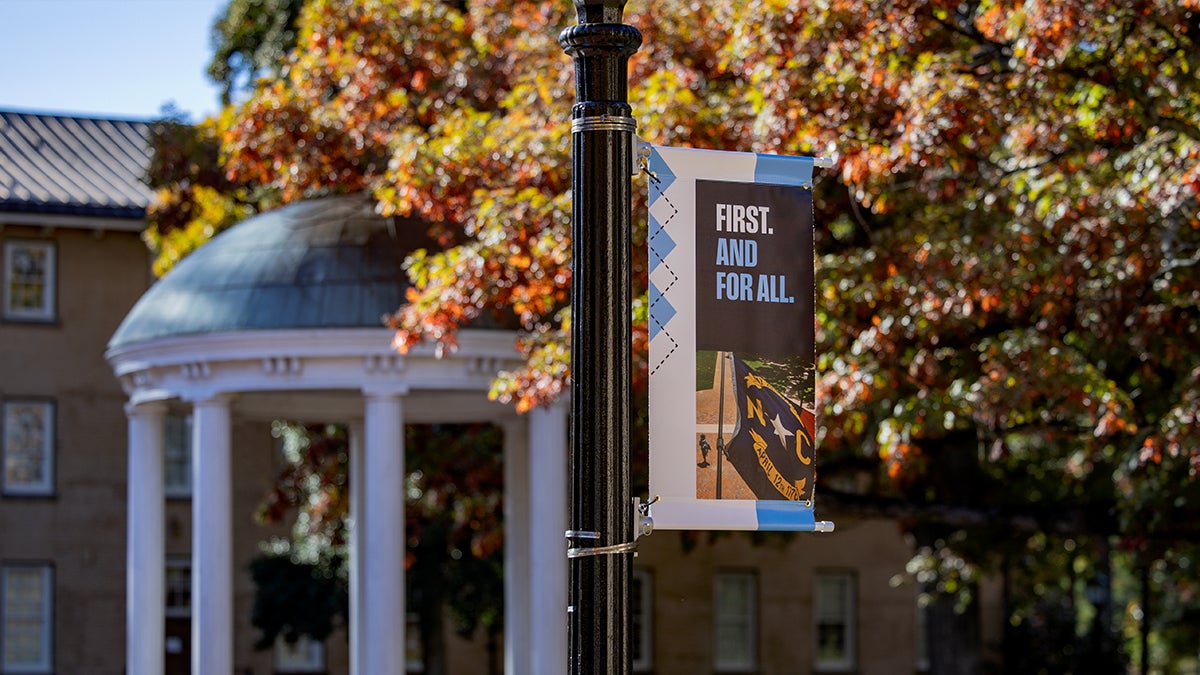
Now, in conjunction with a new marketing campaign, the entire University is adopting the interlocking NC as its official logo. The symbol of the world-class Tar Heel athletics program (63 national championships and counting) will mark Carolina’s full range of achievements: the nation’s No. 4 public university, the perennial top best-value school, a research powerhouse and the Tar Heel State’s flagship institution.
“We’re fortunate to have a logo that carries worldwide recognition while also representing the great state of North Carolina, which the University serves through our research, teaching, work and studies,” said Adrienne King, associate vice chancellor for marketing. “It’s only right that this symbol with so much history should serve as a unifying mark for the birthplace of public higher education.”
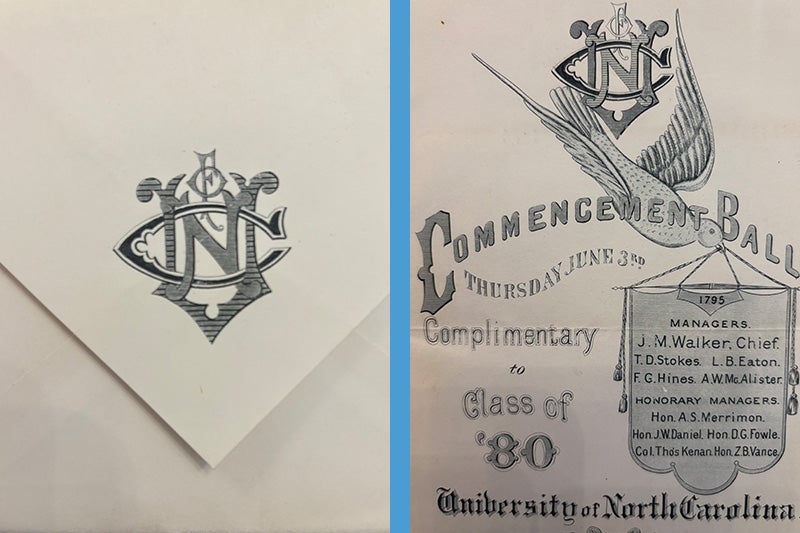
The earliest appearances of the NC logo came on Commencement invitations in the 1870s and 80s. (Nick Graham/University Libraries)
A historical constant
While many university logos change with time, Carolina’s interlocking NC looks remarkably similar in 2025 to the one from the 1800s. “It’s been pretty standard — that block sans-serif font,” Graham said.
One of his favorite captures of its early use is a photo from 1892 that would cause no modern Tar Heel to bat an eye. In it, several students gather at the Old Well, one donning a shirt and hat with the iconic mark.
“He was probably an athlete just wearing his baseball jersey,” Graham said.
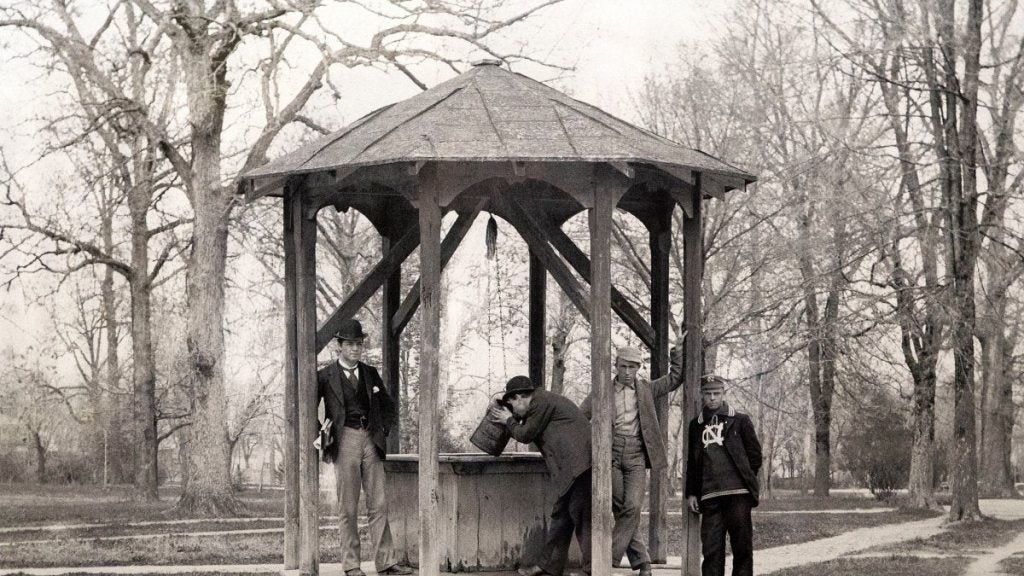
UNC-Chapel Hill students gathering at the Old Well in 1892. (Kemp Plummer Battle Photograph Album, #P0100, North Carolina Collection Photographic Archives, Wilson Library, UNC-Chapel Hill)
The logo was adopted by other sports teams, like football and men’s basketball, including the 1924 hoops national champions.
But the logo’s reach extends beyond the University.
Take license plates, for instance. A 1930 plate issued in Davie County — named after William Richardson Davie, like our beloved poplar tree — included the interlocking NC associated with Carolina. The mark is also seen in a State Board of Health license from the 1890s.
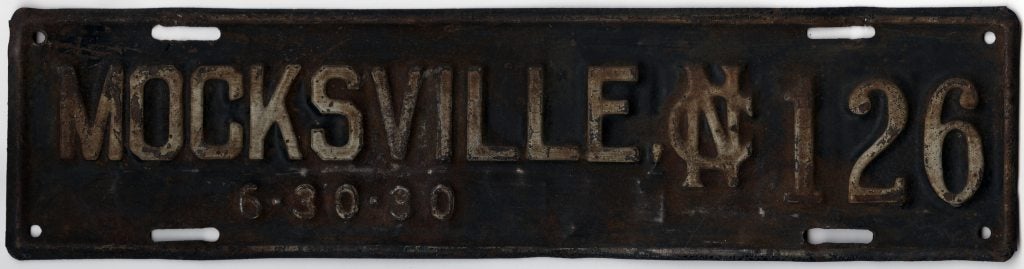
The NC logo has in the past been used as a mark throughout the state, including this 1930 license plate in Mocksville, North Carolina. (North Carolina Digital Heritage Center)
Graham sees the logo’s longevity and evolution as an example of how “statewide symbols became more associated with the University.”
Now as the interlocking NC becomes Carolina’s primary logo, it’ll serve as a visual reminder of how interwoven UNC-Chapel Hill is with the state it serves.
“People from all across North Carolina see it and know what it represents,” King said. “This is where students from all corners of the state come to learn and become the state’s doctors and teachers. This is where national championships are won, where North Carolinians receive lifesaving medical care and where research breakthroughs and innovations influencing everyday life and the economy are made. That’s what those two letters capture.”